
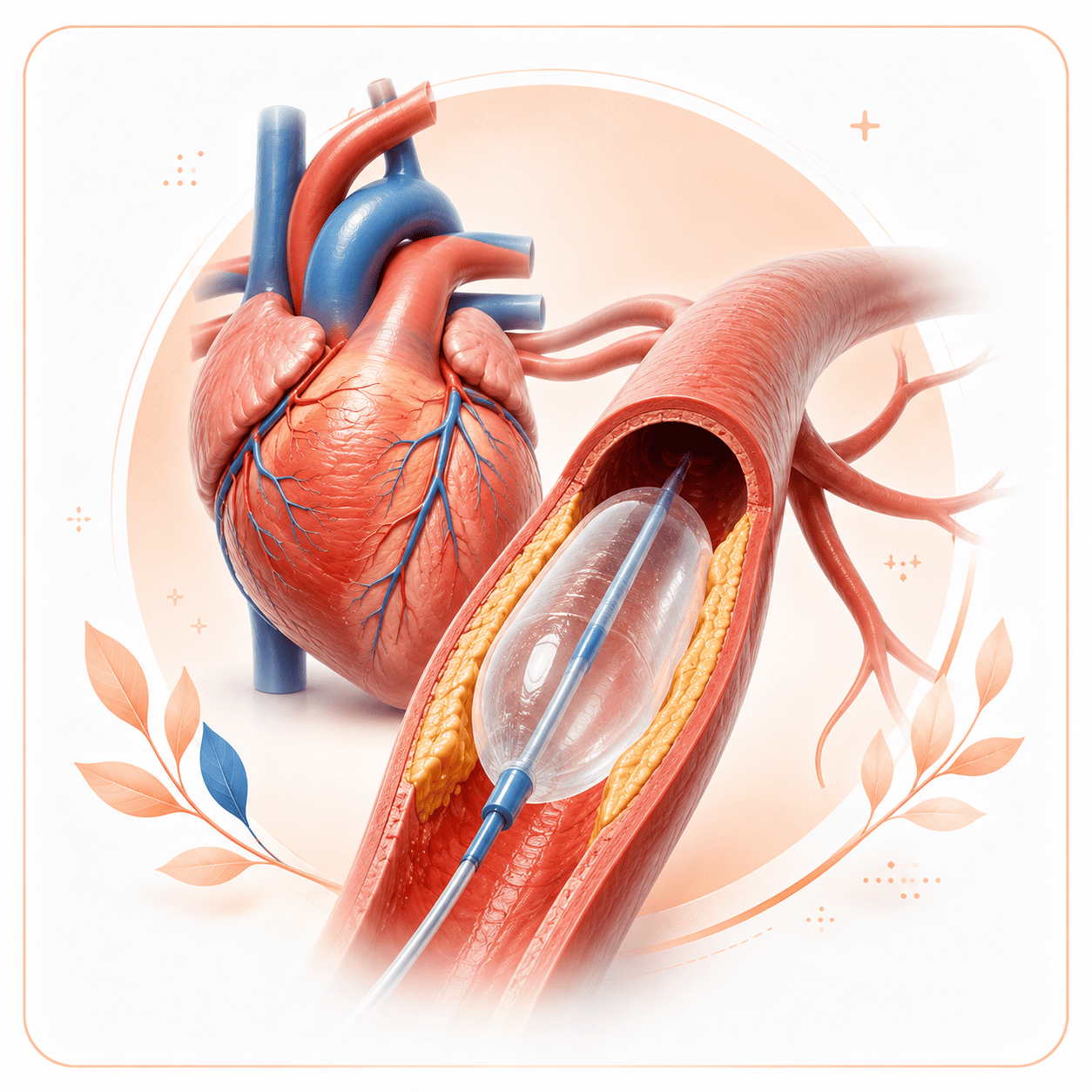
Angioplasty
Angioplasty, also known as Percutaneous Coronary Intervention (PCI), is a minimally invasive procedure used to open narrowed or blocked heart arteries and restore blood flow to the heart. A stent may be placed to help keep the artery open.
Why Choose us?
Value
Focused care
5+
Cardiology Doctors
1+
Angioplasty
12+
Hospitals Around the world
100%
Privacy protected
Overview
1. What is Angioplasty?
Angioplasty is a procedure to open a narrowed or blocked artery supplying blood to the heart. A thin catheter is guided through a blood vessel, usually from the wrist or groin, to reach the blockage.
2. When is it Recommended?
It may be recommended when heart arteries become significantly narrowed or blocked, commonly due to coronary artery disease caused by fatty deposits (plaque). It may also be performed urgently during certain types of heart attack.
3. What Symptoms May a Patient Notice?
Symptoms may include chest pain or pressure, breathlessness, unusual tiredness, sweating, nausea, or pain spreading to the arm, shoulder, neck or jaw. Some patients may have no symptoms before a cardiac event.
4. What Does the Treatment Involve?
A catheter with a small balloon is guided to the blockage. The balloon is inflated to widen the artery, and a stent may be placed to help maintain blood flow.
5. What Are the Main Treatment Options?
Angioplasty may involve balloon angioplasty with stent placement, most commonly using drug-eluting stents. Depending on the extent and location of blockages, coronary bypass surgery (CABG) may be considered instead.
6. How Long Does Treatment & Recovery Take?
An uncomplicated angioplasty may require one day or a short hospital stay, with many patients returning to light activities within a few days. Complex or emergency procedures may require longer hospitalisation.
7. What Are the Important Risks or Considerations?
Angioplasty is an established treatment with high procedural success. Published studies report procedural success rates of around 95% or higher in many PCI populations. Possible complications include bleeding, blood-vessel injury, abnormal heart rhythm, blood clots, heart attack or stroke.
8. Why Consider Treatment in India?
India performs more than 600,000 PCI procedures annually, according to published estimates, providing international patients access to experienced interventional cardiologists and specialised cardiac centres.
9. How Can Medavelle Help?
Medavelle can assist with medical report review, cardiologist and hospital coordination, treatment planning, international patient arrangements and follow-up coordination.
10. What Should the Patient Do Next?
Share your cardiac reports → Cardiologist evaluation → Coronary assessment → Treatment recommendation → Treatment planning in India.
Top Cardiology Hospitals
World-class healthcare facilities specializing in Angioplasty with state-of-the-art technology

Expert Doctors for Angioplasty
Board-certified specialists with experience in cardiology treatment planning