Aortic Valve Replacement
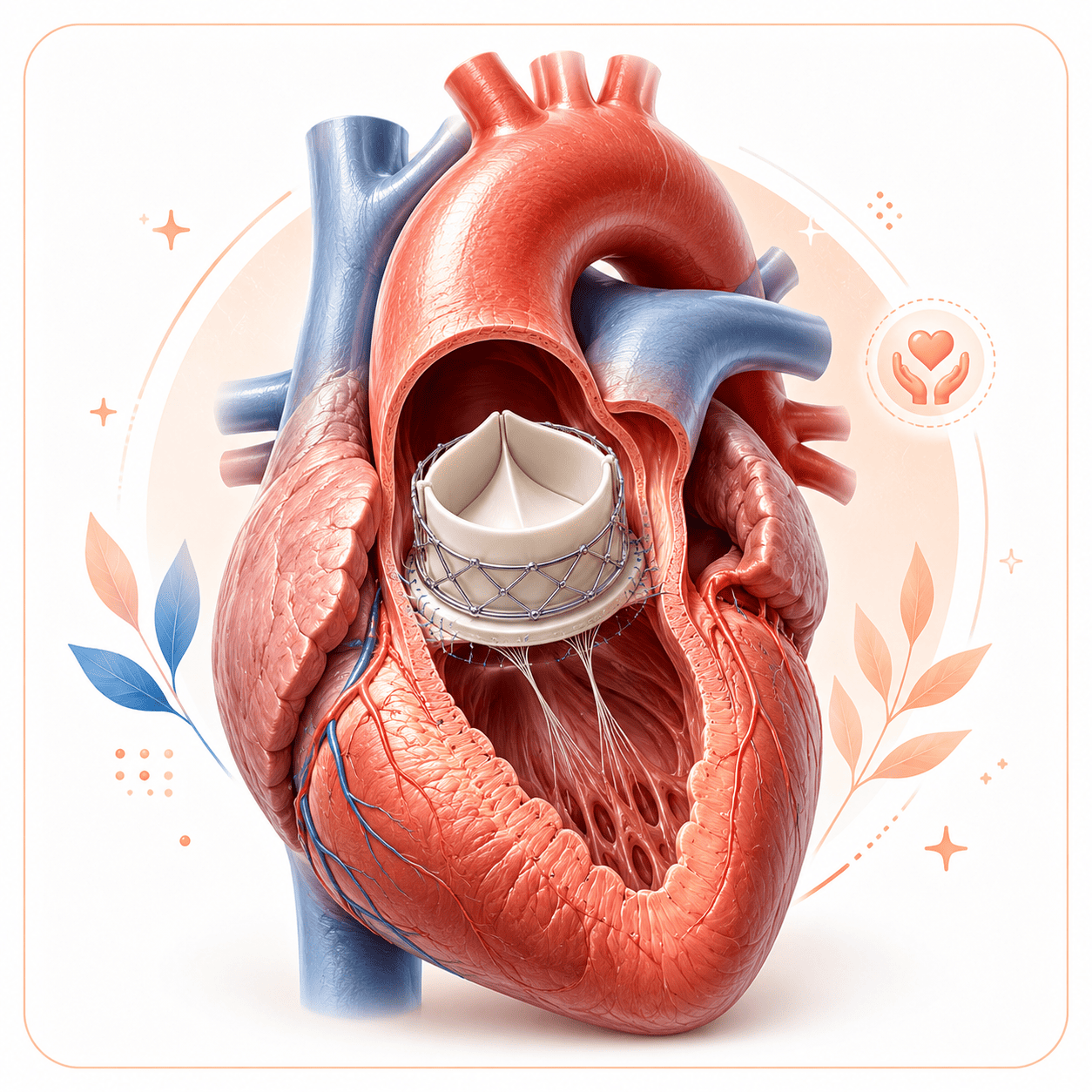
Aortic Valve Replacement (AVR) is a procedure to replace a diseased aortic valve, helping restore normal blood flow from the heart to the body. It may be performed through surgical valve replacement or a minimally invasive transcatheter procedure (TAVR/TAVI), depending on the patient's condition.
Why Choose us?
Value
Focused care
5+
Cardiology Doctors
1+
Aortic Valve Replacement
12+
Hospitals Around the world
100%
Privacy protected
Overview
1. What is Aortic Valve Replacement?
The aortic valve is a flap-like valve that controls blood flow from the heart into the body's main artery (aorta). Aortic valve replacement replaces a valve that has become severely narrowed or damaged.
2. When is Treatment Recommended?
It may be recommended when the aortic valve becomes severely narrowed or leaky, commonly due to age-related valve degeneration, a congenital bicuspid aortic valve, rheumatic heart disease or infection of the valve.
3. What Symptoms May a Patient Notice?
Symptoms may include breathlessness, chest discomfort, dizziness or fainting, unusual tiredness, reduced ability to exercise and swelling of the feet or ankles.
4. What Does the Treatment Involve?
The diseased valve is replaced with a new valve. Depending on the patient's condition and valve anatomy, treatment may involve surgical valve replacement or a catheter-based procedure.
5. What Are the Main Treatment Options?
The main options are Surgical Aortic Valve Replacement (SAVR) using a mechanical or biological valve, and Transcatheter Aortic Valve Replacement (TAVR/TAVI) for selected patients.
6. How Long Does Treatment & Recovery Take?
Hospital stay is commonly around 3–7 days after surgical replacement, while selected TAVR/TAVI patients may be discharged within 1–3 days. Recovery varies according to the procedure and individual health.
7. What Are the Important Risks or Considerations?
Aortic valve replacement has established outcomes with high short-term survival rates. A major randomized study in intermediate-risk patients reported approximately 99% survival at 30 days after both TAVR and surgical replacement. Individual outcomes vary according to age, health, valve condition and treatment approach.
8. Why Consider Treatment in India?
India has specialised cardiac centres offering both surgical valve replacement and TAVR/TAVI, giving international patients access to experienced cardiac teams and advanced valve-treatment facilities.
9. How Can Medavelle Help?
Medavelle can assist with medical report review, cardiologist and cardiac surgeon coordination, hospital selection, treatment planning, international patient arrangements and follow-up coordination.
10. What Should the Patient Do Next?
Share your cardiac reports → Specialist evaluation → Echocardiography & valve assessment → Treatment recommendation → Treatment planning in India.
Top Cardiology Hospitals
World-class healthcare facilities specializing in Aortic Valve Replacement with state-of-the-art technology


Expert Doctors for Aortic Valve Replacement
Board-certified specialists with experience in cardiology treatment planning