
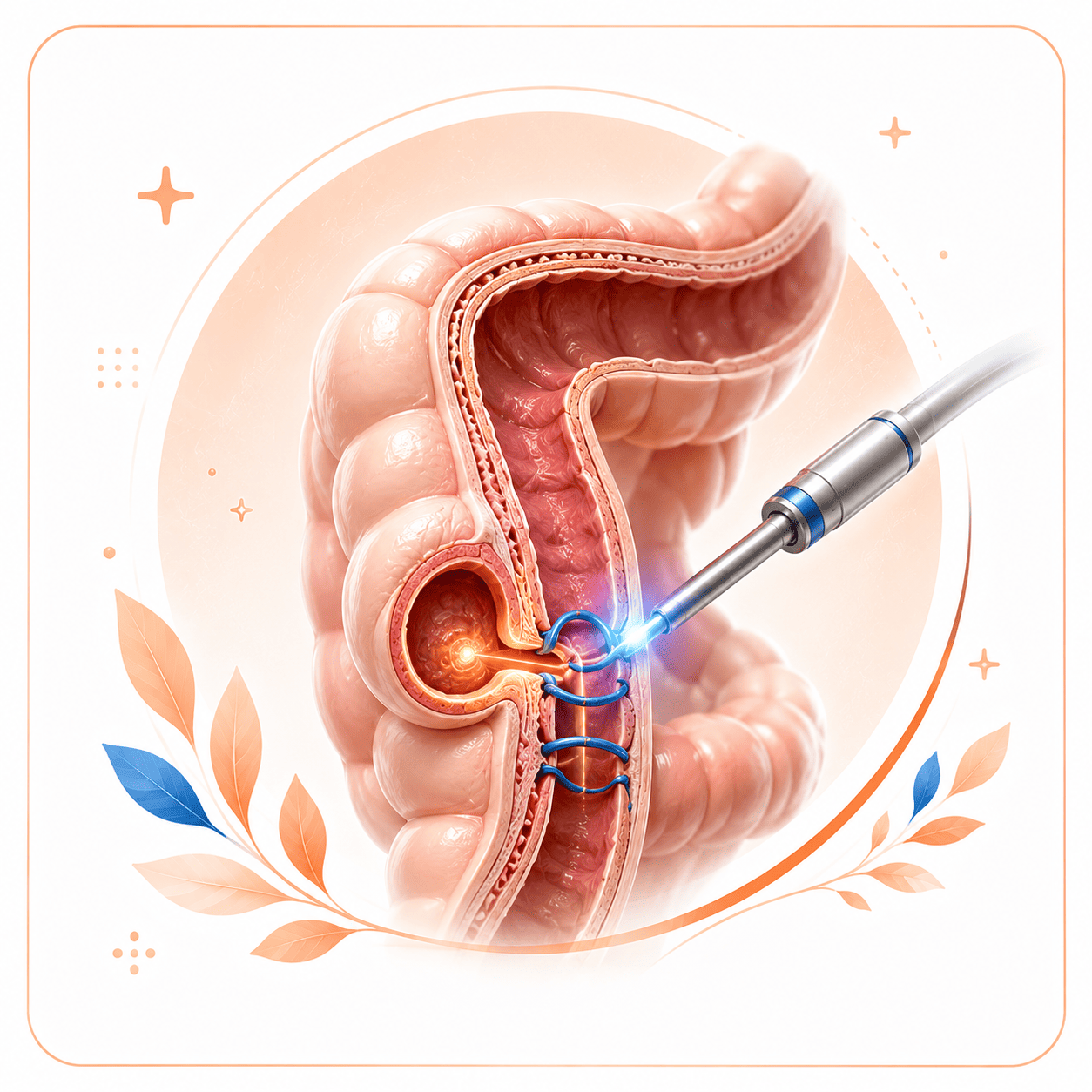
Fistula Surgery
Fistula Surgery is a procedure used to treat an abnormal connection between two organs, tissues or body surfaces. The most common type treated surgically is an anal fistula, an abnormal tunnel between the anal canal or rectum and the skin near the anus.
Why Choose us?
Value
Focused care
0+
GI & Bariatric Doctors
1+
Fistula Surgery
12+
Hospitals Around the world
100%
Privacy protected
Overview
1. What is Fistula Surgery?
Fistula surgery aims to close or remove the abnormal tract and treat any associated infection or abscess while protecting surrounding structures, particularly the anal sphincter in cases of anal fistula.
2. When is it Recommended?
Surgery may be recommended when a fistula causes persistent discharge, recurrent infection, pain, swelling or abscess formation, or when it does not heal with conservative treatment.
3. What Symptoms May a Patient Notice?
For an anal fistula, symptoms may include persistent pus or blood discharge near the anus, recurrent swelling, pain, skin irritation or a small opening near the anus. Symptoms vary according to the fistula's location.
4. What Does the Treatment Involve?
The surgeon identifies the fistula tract and treats it using the most appropriate technique. For anal fistulas, the procedure may involve opening the fistula tract, removing the tract or closing it while preserving the anal sphincter.
5. What Are the Main Treatment Options?
Depending on the fistula, treatment may include fistulotomy, seton placement, advancement flap repair, ligation of the intersphincteric fistula tract (LIFT), fistula plug or minimally invasive techniques. Complex fistulas may require staged treatment.
6. How Long Does Treatment & Recovery Take?
Simple fistula surgery may take around 30–60 minutes and is often performed as a day-care or short-stay procedure. Recovery commonly takes 1–4 weeks, although complex fistulas may require longer or multiple procedures.
7. What Are the Important Risks or Considerations?
Possible complications include infection, bleeding, recurrence, delayed wound healing and, in anal fistula surgery, potential injury to the anal sphincter leading to changes in bowel control. The risk depends strongly on the fistula's complexity and its relationship to the sphincter muscles.
8. Why Consider Treatment in India?
India has specialised colorectal, gastrointestinal and general surgery centres offering advanced fistula treatment, including minimally invasive and sphincter-preserving techniques for complex cases.
9. How Can Medavelle Help?
Medavelle can assist with medical report and imaging review, colorectal or general surgeon coordination, fistula assessment, surgical technique selection, hospital coordination and postoperative follow-up arrangements.
10. What Should the Patient Do Next?
Share your reports/imaging → Specialist evaluation → Fistula mapping & assessment → Surgical recommendation → Treatment planning in India.
Top GI & Bariatric Hospitals
World-class healthcare facilities specializing in Fistula Surgery with state-of-the-art technology

Expert Doctors for Fistula Surgery
Board-certified specialists with experience in gi & bariatric treatment planning