
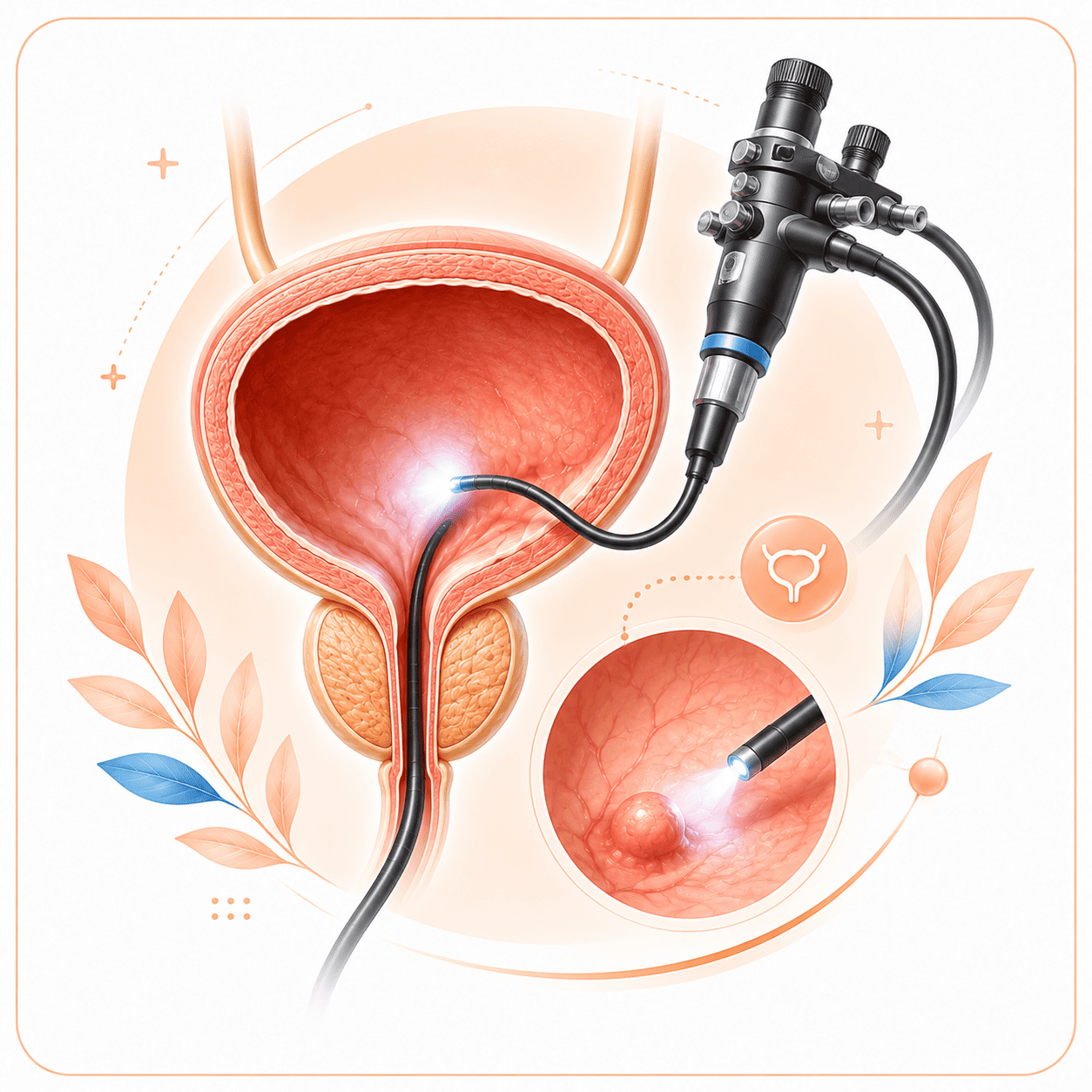
Cystoscopy
Cystoscopy is a diagnostic procedure that allows a urologist to look directly inside the urinary bladder and urethra using a thin instrument called a cystoscope. It can help identify causes of blood in the urine, urinary problems, infections, stones or abnormal growths.
Why Choose us?
Value
Focused care
0+
Nephrology & Urology Doctors
1+
Cystoscopy
12+
Hospitals Around the world
100%
Privacy protected
Overview
1. What is Cystoscopy?
A cystoscope is a thin tube with a camera or viewing system that is passed through the urethra into the bladder. It allows the urologist to examine the inner lining of these structures.
2. When is it Recommended?
It may be recommended for symptoms or findings such as blood in the urine, repeated urinary infections, difficulty urinating, painful urination, unexplained bladder symptoms or suspected bladder tumours or stones.
3. What Symptoms May a Patient Notice?
A patient may experience blood in the urine, burning while urinating, frequent or urgent urination, difficulty starting urination, pelvic discomfort or recurrent urinary infections. Cystoscopy may also be recommended after an abnormal imaging or urine test.
4. What Does the Treatment Involve?
The cystoscope is gently introduced through the urethra into the bladder. The bladder is filled with sterile fluid to allow the urologist to examine its lining. If necessary, a biopsy or minor procedure may be performed during the same examination.
5. What Are the Main Treatment Options?
Cystoscopy may be performed as a flexible cystoscopy, usually under local anaesthesia, or a rigid cystoscopy, which may be performed under regional or general anaesthesia. Operative cystoscopy can also be used for selected procedures such as biopsy or stone treatment.
6. How Long Does Treatment & Recovery Take?
A diagnostic flexible cystoscopy commonly takes around 10–20 minutes and is usually performed as a day-care procedure. Patients can generally return home shortly afterwards. Mild burning or urinary discomfort may continue for a day or two.
7. What Are the Important Risks or Considerations?
Cystoscopy is an established procedure with a generally favourable safety profile. Possible complications include temporary burning, blood in the urine, urinary infection, difficulty urinating and, rarely, injury to the urethra or bladder.
8. Why Consider Treatment in India?
India has specialised urology and uro-oncology centres offering diagnostic and operative cystoscopy, advanced urinary imaging, bladder tumour evaluation and comprehensive treatment for urological conditions.
9. How Can Medavelle Help?
Medavelle can assist with urology report review, urologist and hospital coordination, cystoscopy planning, biopsy or treatment coordination, international patient arrangements and follow-up coordination.
10. What Should the Patient Do Next?
Share your reports → Urology evaluation → Cystoscopy assessment → Procedure recommendation → Treatment planning in India.
Top Nephrology & Urology Hospitals
World-class healthcare facilities specializing in Cystoscopy with state-of-the-art technology


Expert Doctors for Cystoscopy
Board-certified specialists with experience in nephrology & urology treatment planning