Chemotherapy
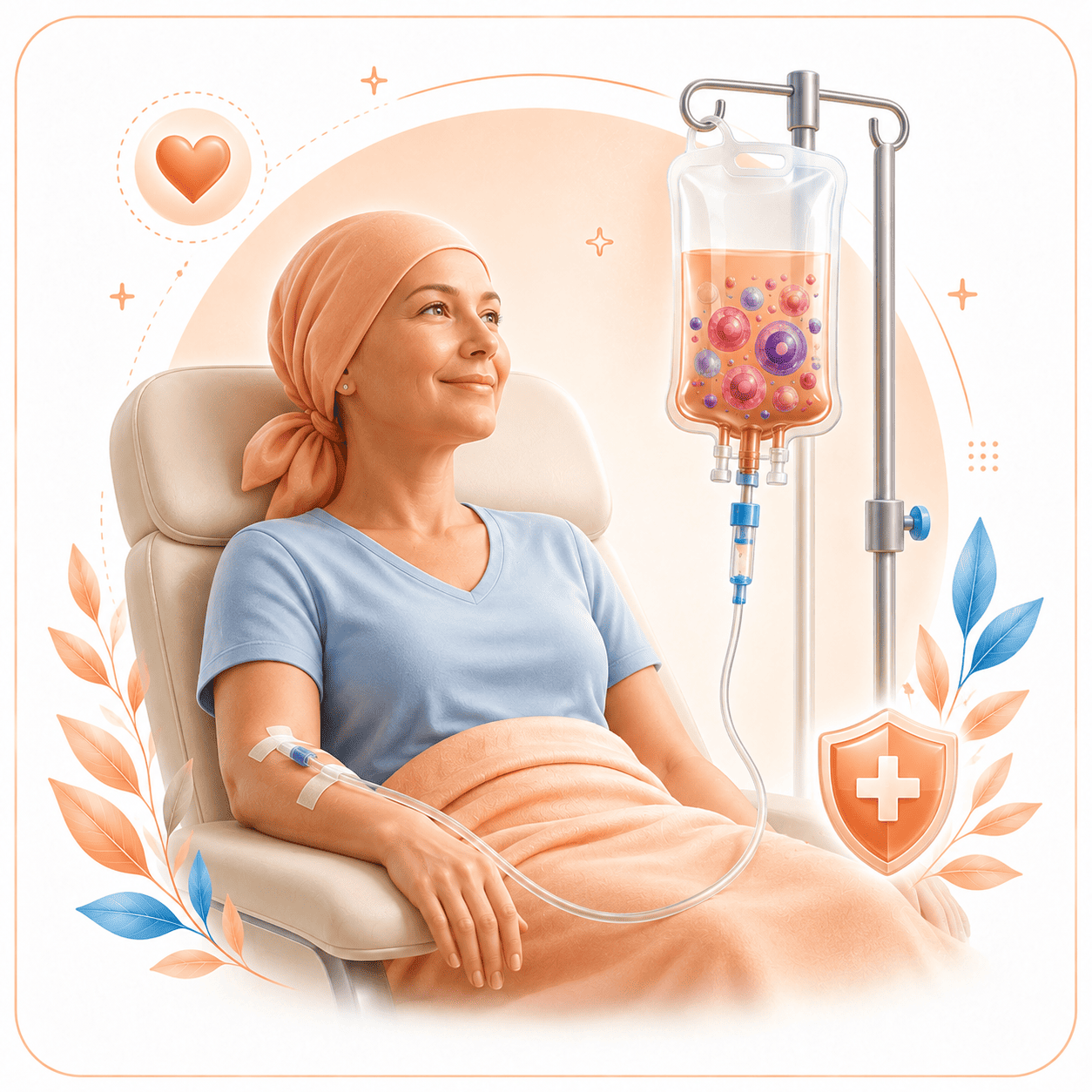
Chemotherapy uses anti-cancer medicines to destroy or control cancer cells. It may be used alone or combined with surgery, radiation therapy, targeted therapy or immunotherapy.
Why Choose us?
Value
Focused care
4+
Oncology Doctors
1+
Chemotherapy
12+
Hospitals Around the world
100%
Privacy protected
Overview
1. What is Chemotherapy?
Chemotherapy is a systemic cancer treatment that uses specialised medicines to destroy cancer cells, slow their growth or prevent them from multiplying. The medicines travel through the bloodstream and may affect cancer cells throughout the body.
2. When is Chemotherapy Recommended?
Chemotherapy may be used:
- Before surgery to shrink a tumour (neoadjuvant therapy)
- After surgery to reduce the risk of cancer recurrence (adjuvant therapy)
- Together with radiation therapy
- For advanced or metastatic cancer
- To control symptoms or slow cancer progression in selected patients
The treatment plan depends on the cancer type, stage and individual patient condition.
3. What Does Chemotherapy Treatment Involve?
Before treatment, the oncologist reviews:
Biopsy & pathology → Cancer staging → Blood tests → Imaging → Previous treatment history → Chemotherapy planning
Chemotherapy may be administered through:
- Intravenous infusion
- Injection
- Oral medicines
- Other specialised routes depending on the treatment
4. How Long Does Chemotherapy Take?
Chemotherapy is usually given in cycles, allowing time between treatments for the body to recover.
The number of cycles and overall treatment duration may range from several weeks to several months, depending on the cancer and treatment protocol.
5. What Are the Main Types of Chemotherapy?
Different chemotherapy medicines are selected according to the cancer type. Treatment may involve:
- Single-drug chemotherapy
- Combination chemotherapy
- High-dose chemotherapy in selected conditions
- Chemotherapy combined with other cancer treatments
The oncology team determines the appropriate regimen.
6. What Are the Possible Benefits?
Depending on the cancer, chemotherapy may:
- Cure certain cancers
- Shrink tumours before surgery
- Reduce the risk of cancer recurrence
- Slow cancer progression
- Help control symptoms
Treatment effectiveness varies according to the specific cancer and individual response.
7. What Are the Possible Side Effects?
Side effects depend on the medicines used and may include:
- Fatigue
- Nausea and vomiting
- Hair loss
- Reduced blood cell counts
- Increased infection risk
- Mouth sores
- Appetite changes
- Numbness or tingling in some cases
Modern supportive medicines can help prevent or manage many side effects.
8. Why Consider Chemotherapy Treatment in India?
India has specialised oncology centres offering:
- Medical oncology consultations
- Advanced pathology and molecular testing
- Personalised chemotherapy protocols
- Day-care chemotherapy facilities
- Supportive cancer care
- Multidisciplinary oncology management
9. How Can Medavelle Help?
Medavelle can assist with:
Medical-record review → Oncology specialist coordination → Hospital selection → Treatment planning → Cost estimation → International patient arrangements.
10. What Should the Patient Do Next?
Share pathology & imaging reports → Oncology evaluation → Treatment planning → Chemotherapy protocol → Treatment cycles → Follow-up.
Top Oncology Hospitals
World-class healthcare facilities specializing in Chemotherapy with state-of-the-art technology

Expert Doctors for Chemotherapy
Board-certified specialists with experience in oncology treatment planning