
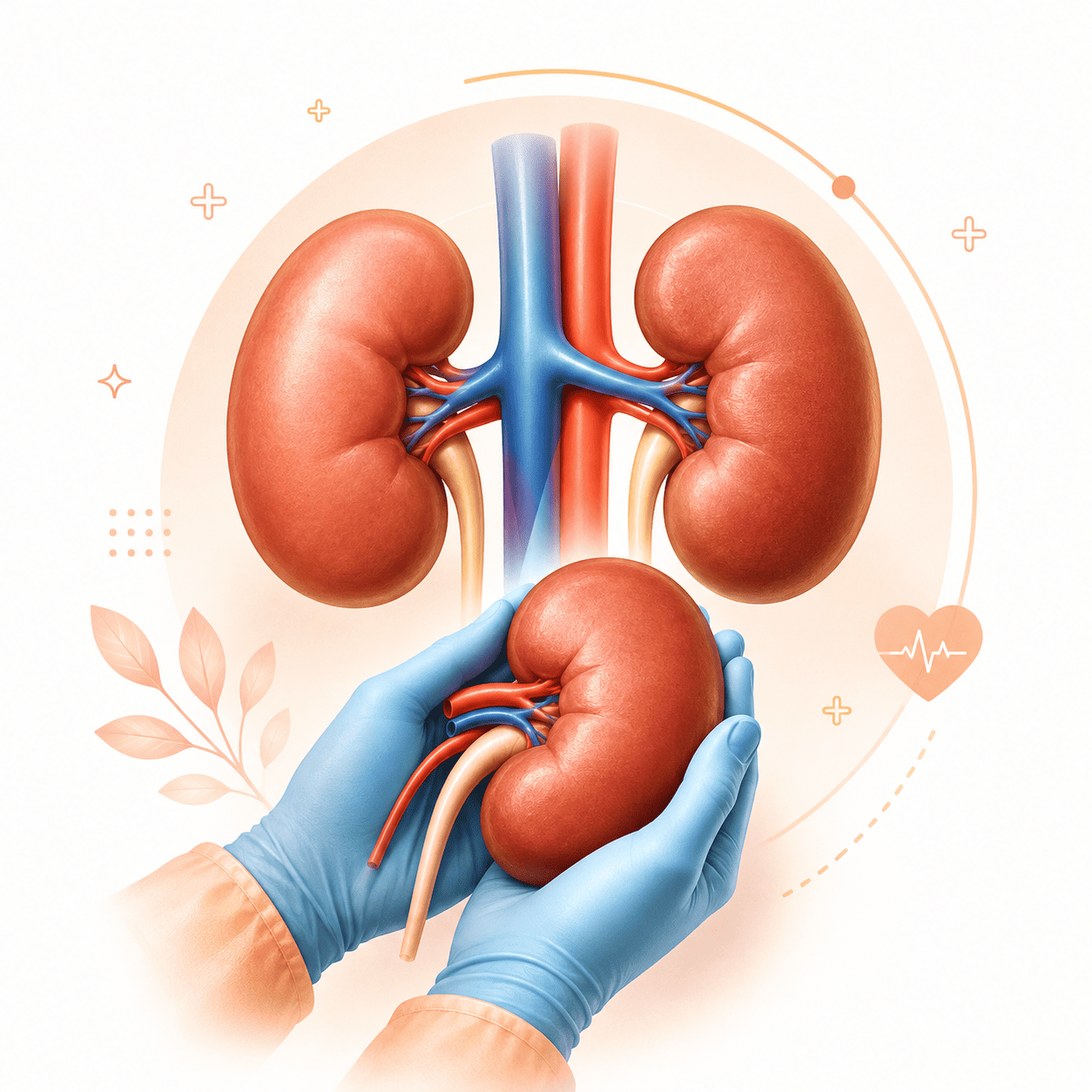
Kidney Transplant
Kidney transplantation replaces a failed kidney with a healthy donor kidney, offering selected patients with end-stage kidney disease the possibility of improved long-term kidney function and quality of life.
Why Choose us?
Value
Focused care
0+
Organ Transplant Doctors
1+
Kidney Transplant
12+
Hospitals Around the world
100%
Privacy protected
Overview
1. What is a Kidney Transplant?
A kidney transplant is a surgical procedure in which a healthy kidney from a living or deceased donor, subject to applicable laws and medical criteria, is transplanted into a patient with advanced kidney failure.
In most cases, the patient's own kidneys are not removed unless there is a specific medical reason.
2. When is a Kidney Transplant Recommended?
Kidney transplantation may be considered for patients with end-stage kidney disease (kidney failure) when they are medically suitable for transplantation.
Common causes of kidney failure include:
- Chronic kidney disease
- Diabetes-related kidney disease
- High blood pressure-related kidney damage
- Glomerular diseases
- Polycystic kidney disease
- Certain inherited or autoimmune kidney conditions
3. What Does the Pre-Transplant Evaluation Involve?
A detailed evaluation is required before transplantation. This may include:
- Kidney-function and blood tests
- Blood group and tissue compatibility testing
- Crossmatching
- Heart and general health assessment
- Screening for infections
- Imaging studies
- Donor medical evaluation
- Transplant specialist assessment
The transplant team determines whether transplantation is appropriate and whether the donor-recipient combination is suitable.
4. What Does the Kidney Transplant Procedure Involve?
The general process includes:
Recipient evaluation → Donor evaluation → Compatibility testing → Transplant approval → Surgery → ICU/postoperative monitoring → Kidney-function monitoring → Long-term follow-up
During surgery, the donor kidney is usually placed in the lower abdomen and connected to the recipient's blood vessels and bladder.
5. What Types of Kidney Donors Are Possible?
Depending on medical suitability and applicable laws, transplantation may involve:
- Living related donors
- Living donors permitted under applicable transplant regulations
- Deceased donors, subject to organ availability and transplant allocation systems
All transplantation must follow the applicable legal, ethical and medical requirements.
6. How Long Does Surgery and Recovery Take?
The surgery commonly takes approximately 3–5 hours, although this can vary.
Typical recovery may include:
- Hospital stay: approximately 7–14 days
- Initial recovery: several weeks
- Long-term follow-up: lifelong
Regular monitoring is essential after transplantation.
7. What Are the Expected Benefits and Outcomes?
For suitable patients, kidney transplantation may provide:
- Improved kidney function
- Reduced or eliminated need for dialysis when the transplant functions well
- Greater dietary and lifestyle flexibility
- Improved quality of life
However, transplant outcomes vary depending on donor compatibility, recipient health, immune response and long-term medical care.
8. What Are the Risks or Considerations?
Potential risks include:
- Surgical complications
- Bleeding or infection
- Blood clots
- Delayed function of the transplanted kidney
- Organ rejection
- Side effects from immunosuppressive medicines
- Increased susceptibility to certain infections
Patients usually require long-term immunosuppressive medication to help prevent rejection.
9. Why Consider Kidney Transplant Treatment in India?
India has specialised transplant centres offering:
- Experienced nephrology and transplant-surgery teams
- Advanced tissue compatibility testing
- Living-donor transplant programmes
- Intensive postoperative monitoring
- Dedicated transplant ICUs
- Long-term nephrology follow-up
10. How Can Medavelle Help and What Should the Patient Do Next?
Medavelle can assist with:
Medical-record review → Nephrologist and transplant-surgeon coordination → Hospital selection → Preliminary treatment planning → Cost estimation → International patient arrangements.
Next step: Share kidney-function reports & dialysis records → Transplant specialist evaluation → Donor and recipient assessment → Compatibility testing → Transplant planning → Surgery → Long-term follow-up.
Top Organ Transplant Hospitals
World-class healthcare facilities specializing in Kidney Transplant with state-of-the-art technology


Expert Doctors for Kidney Transplant
Board-certified specialists with experience in organ transplant treatment planning